Cutting Edge Eco Chic Innovation in Clothing Production & Design
Eco-aware fashionistas already know that cotton is a singularly un-green & spectacularly wasteful crop, requiring more pesticides than almost any other crop and over 400 gallons of water to grow enough cotton to produce but a single t-shirt. Similarly, they embrace dying methods that use no water (like the Air Dry Dye method popularized by alottosay tees), non-chemical plant-based dyes, and silkscreening that relies on soy inks which produce no toxic byproducts.
However, here are a few new innovations in clothing production that you might not yet be familiar with:

Zero Waste Clothing Although garment factories place pattern pieces as closely together as possible, an average of 15% of the fabric used in the production of clothing is still discarded as scraps. The Zero Waste movement is attempting to reduce this percentage to nothing by constructing garments with pattern pieces that interlock, like a giant jigsaw – using any fabric that does end up on the cutting room floor as trim and for embellishments. Although it might seem counter-intuitive, clothing made this way is not ill-fitting nor strangely shaped; it is, however, cheaper to manufacture and to cut. Practiced by current Parsons instructor Timo Rissanen, the Zero Waste movement in the fashion industry is spearheaded by former Rissanen student Mark Liu, the winner of the Ethical Fashion Forum’s Innovation Award. By creating garments via the Zero Waste principle, these innovators are proving that fashion and eco-sustainability are no longer mutually exclusive concepts.

“Production” on Demand Lengthy wait-lists for the overpriced “it” item of the moment tend to get the most press, but the truth is that the fashion world is actually plagued by over-production. Design houses order countless garments from factories and typically, they don’t sell out completely; because there’s just not enough demand, remaining items move to discount stores, off-price stores, and eventually overseas. To counteract this excess of merch flooding the marketplace, New York-based clothing line SANSdownloadable patterns from their line for $6 to $20 apiece – to make yourself or take to a tailor – giving consumers the option of making an item on demand. By producing it yourself locally, the carbon footprint is smaller, the cost cheaper, and the item less likely to be tossed out. “When you have a piece that you made yourself, you relate to it differently. You value it differently,” notes Lika Volkova, designer of SANS. For a good selection of downloadable patterns, try BurdaStyle.com, one of the largest online sources of free and affordable patterns (their most expensive is $7.50). Even the most “overpriced” patterns (hello Vogue patterns at $18 each!) are still a relative steal: add a yard or three of fabric, (designer tip: buy fabric in odd numbers – 1, 3 or 5 yards for items like a top, skirt/pants, or suit respectively), plus your time – and you’ll end up with a finished price for around $30-$50. And should you decide to splurge on really opulent & pricey designer fabric – you’ll still enjoy a much higher quality, better fitting garment or outfit for much, much less. has begun offering
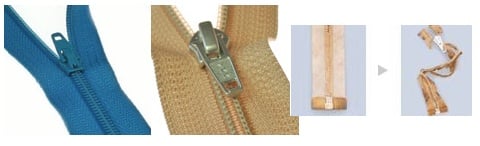
Eco-Friendly Fastenings Most of us give little thought to the snaps, grommets, hooks, zippers and plastic or metal buttons that fasten our clothing…and eventually find their way into landfills. One solution is to purchase clothing made with no metal fastenings, such as wrap shirts, kimono-style jackets, tops with frog closures, ribbons, or stretchy jersey. For woven sheath dresses or more structured items, look for either the Natulon zipper from YKK, made from recycled PET polyester, or their biodegradable ReEarth zipper made from corn and other plant materials. Both are considered eco-friendly and low-impact, as are buttons and fastenings made from natural materials such as wood, bamboo, and nuts. Find them at eco-friendly retailers like Fashion-Conscience.com and The Green Loop.

Designed by You to Last The trouble with “fast” fashion is that it’s cheap and disposable; when we consider how little we paid for something along with the fact we no longer wear it – we simply get rid of it. However, if your closet was filled with pieces that you helped design – choosing everything from fabrics, to silhouette, to trim – it would be a lot less likely to get tossed. At StyleShake, for as little as $78, you can design and customize your own dress, and receive your made-to-order piece in about 2 weeks. For younger fashionistas, FashionPlaytes lets girls design everything from hoodies to leggings to bags using their own graphics or elements from the site. Alternatively, est.Today, Zazzle & CafePress are all great resources for customizing tees, tracksuits, aprons, and even housewares (clocks, mugs, tiles, cards, ornaments).
UpCyling What Already Exists One of the easiest ways to be fashionably eco is by not buying anything new. New products require raw materials which, no matter how sustainable or green, require some mix of energy, water, and human labor to produce. Refashioning what already exists is as eco chic as can be…starting with your own closet. To get some great ideas and tutorials on how to revamp what you already have, check out ThreadBanger.com, Craftster.org, and CutOutandKeep.net. The best part of DIY? It puts your stamp where it belongs: on your things instead the environment.
The More You Know Info is power, especially with respect to eco-friendly issues. Some of our fave go-to sources include Green Grechen, EcoStiletto, the GirlieGirl Army, Eco Fashion World, White Apricot, and Ecouterre – all of which will keep your look – and outlook – fashionably sustainable.
Carly J. Cais, Contributing Editor
(image at top)
As written for FashionTribes.com
V Magazine – “Doll Parts” Spread
 DOLL PARTS by V Magazine
Photographs by Glen Luchford / Styling by Panos Yiapanis
Natasha Poly, shot by Glen Luchford for the upcoming V MAGAZINE (issue #63). Inspired purely by Hole front woman Courtney Love, Natasha sports textured bustiers, kilts, petticoats and headpieces constructed of toys throughout the spread. Although the release date has yet to be announced, “Nobody’s Daughter,” the fourth studio album by Hole, is set for release later this month. V63 does not hit newsstands until January 14, 2010.
 The self-made, rough-and-tumble glamour of Courtney Love couldn’t feel more of-the-moment. In an ode to the queen of grunge, whose album is out this month, supermodel Natasha Poly piles on the ruffles, prints, and girlish fineries of spring
 I’m not sure I agree that Courtney Love’s “rough-and-tumble” is any more “of the moment” than it was when she first rose to fame (I personally love the deconstructed mish-mash that is her “look” most of/some of the time) but I find it amusing that after being a media pariah for so long she’s now being featured again in a spread…well, sort of. Her style is being featured, that is. I wonder why Natasha Poly is playing her rather than Courtney appearing herself? (Maybe an attempt to fashionize someone whose actions are just too controversial for glammed-up photos anymore? An attempt at iconography whereas the musician and paparazzi train wreck that we’re all familiar with defies iconic status and in fact, doesn’t really have a singular style?)
I don’t know, but I’m getting a lot of great DIY ideas just looking at this spread. And Jo-Ann’s sells pre-pleated and ruffled cotton trim – so just think how simple it would be to sew that on to the bodice of a dress like the right one in spread #3! And a crown…made of doll legs. Somewhat disturbing, but yes – this says Courtney Love!
What do you guys think of the spread?
-Carly J. Cais
Vivi Model Elli-Rose and Boyfriend Gui at Home in Tokyo

I just came across the website The Selby through Fatlace. I was completely unaware of its existence up until now – but am so glad to have stumbled upon it! Photographer Tod Selby has compiled an online photo-journal of people and their homes around the world (Tokyo, Brookly, London, Los Angeles, Manhattan, Milan, Paris…) Seeing people, photographed in their homes, and the variety of living spaces they inhabit – so cool. (Am I also a little creepy for being curious about how other people live??)
Fabulous photography – arresting characters – a voyeuristic peek into the lives of others – what more is there to say?
Except this…I was doubly surprised at a collection of photos of model Elli-Rose (click to link to her personal blog – in Japanese) – a model anyone who reads Vivi Magazine will recognize instantly. There she is, in the home she and boyfriend Gui inhabit in Tokyo – lolling around, playing with their kitten, opening up their closets, being frank with the sex-talk…v. interesting to see her like this. I had no idea – nor that she was only 20! (Or maybe I did and I forgot.) It’s always interesting to see a more intimate portrait of people who you know so well by sight but in reality…don’t know very well at all.


more of Elli-Rose’s apartment here
I love the photographer’s selection of items he photographs around their apartment – the tiny minutiae and objets so seemingly insignificant – it really gives you a feel for the owners’ personalities. I was ROFL over the “Super Premium Catty Milk” above! Those silly Japanese and their penchant for English words on their products!!
Definitely check out The Selby is you have a free moment (or a free hour) for more intimate looks into other people’s spaces – and to satisfy the inner voyeur we all know is there.;-)
-Carly J. Cais
V Magazine – “One Size Fits All” Spread
 If it’s bright enough, tight enough or eye-poppingly printed enough, odds are it’ll work on any figure. Crystal Renn, model and author of Hungry, and Jacquelyn Jablonski, spring’s new star, show off the season’s most sizzling looks
Photography by Terry Richardson; Styling by Mel Ottenberg
 In case you are interested, the models’ measurements are as follows:
Jacquelyn: 5’9″….32-24-34
Crystal Renn: 5’9″…36-31-41
On first glance, I thought they did this shoot with only Crystal – then photoshopped her skinny to create the left photo – I honestly didn’t think they were 2 different people at first!
It’s interesting to note that they are both the same height – but to me, Crystal looks shorter. I guess the skinnier you are, the taller you look. But it’s just an optical illusions! (Is it just me? Maybe it’s just me.) Plus, Crystal’s bust size is only 4″ larger than Jacquleyn’s….but her waist AND hips are 7″ larger. Strangely, she doesn’t look it – in fact, she just looks proportionately larger overall, not just larger in the waist/hip area.
 I think they both look pretty smokin’ and high-fashion…and for me, it also took a moment to realize that the two girls are two different sizes since everything else is so similar in the shoot.
 One of the reasons why Crystal Renn is so successful as a “plus-size” model is that she is proportionately plus-size…i.e., her weight is distributed throughout her body evenly and isn’t bunched up in one place (unlike the majority of us when we gain weight…most gain it in a couple places, not evenly throughout) and this, I think, visually makes her appealing. (I think that the human attraction to symmetry and proportion trumps the human attraction to skinniness every time.) She looks toned and fabulous & I’m not saying she is fat or anything – she just looks a little larger overall than the model on the left.
I can’t wait for her book, Hungry: A Young Model’s Story of Appetite, Ambition and the Ultimate Embrace of Curves
So what do we all think? (I think it licks the Glamour Magazine November 2009 Issue plus-sized model spread into a cocked hat, personally.) High-fashion vs. nakedness?? More please!
-Carly J. Cais
America’s Most Stylish Blogger Competition: Challenge #5 Video and Voting Widget
Hear what Adam Lippes [designer of Adam] has to say about our styling of the Plan B tie dye Charcoal Leggings from Bluefly.com! Then vote below!
Who I Am

Carly J. Cais I am a DIY’er, designer, sewist, maker, and marketer. Chic Creative Life is where I share what I do, and help others bring their unique style into their own lives.





Just Pinned