Jul 26, 2010 | Beauty
Add a brooch to a folded wide scarf for a headband-look. (Fold scarf into about 3″ wide to replicate this.)
I know you guys are probably completely sick of my going on and on about my favorite magazine Vivi, but I thought this particular editorial on styling with hair accessories was really useful. With summer here I’m suffering from bad hair day after bad hair day (what with the hot, dry Oregon summer and me growing my hair out n all) – so hair accessories for me a MUST to induce a little bit of chic-ness into my outfit when everything on my head has fallen flat.
So here you go – I made these extra big so you can click on them and enlarge to see the how-to. Hope this is helpful and gives you some styling ideas!
Bohemian-style hair: using an elasticized headband and a flower headband.
Using scarves: 1) Regular Bow (uses 30″ square scarf) and Big Bow (uses 69″ long scarf) , 2) Petite Ponytail Scarf (uses 19″ square scarf), 3) Turban (uses 63″ long scarf)
from Vivi Magazine August issue
xoxox
Carly
Leave Comment
Jul 25, 2010 | DIY, From You, Life
from formspring.me:
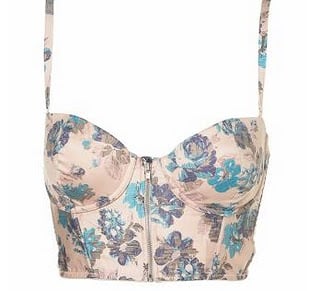
Hey I wondered if you could help me with making one of these “bralets”, do you know how to make a pettern for them? http://api.ning.com/files/zcwHPg1VgsLUzsS1e99DsdD4ZlRqQdct0bCSs9*1rseLJIAKirKx55a0ARHDEJCLVDBdi8fpp9Gn0zIw37Jm5Vb-jsk5K1bz/bralet.jpg
Leave Comment
Jul 23, 2010 | DIY, From You
from formspring.me:
Hi! Do you have any tips on how to recreate this necklace? http://img824.imageshack.us/img824/5264/dsc0749.jpg Thanks!
Leave Comment
Jul 17, 2010 | Fashion, From You
Is there a way to make cheap flats fit someone with two different sized feet? I have a size 7 foot and a size 6 foot and can’t get ballent pumps to fit unless they are elasticated and they are hard to find or are expensive.
Leave Comment
Jul 14, 2010 | Fashion, From You
from formspring.me:
How do you get used to wear high heels for long periods of time? I keep buying high heels but never wear them as they make my feet hurt.
Wearing high heels, especially the higher ones, takes lots of practice, and is an acquired skill despite what shoe manufacturers and advertising want you to think. It’s definitely something you have to work up to condition your feet to get used to the wonky position they are forced into. I may not be the best person to ask since I can rarely wear heels as a stay at home mom with no full-time job, but once upon a time I too was wearing heels all day. When I was in school in Japan I remember challenging myself with wearing a pair of 5″ platform boots all day long and not falling down: 20 minutes walking to the train station, 10 minute standing train ride in rush hour, changing trains going up and down long flights of stairs, a 15 minute standing train ride still in rush hour, and 10 minutes walking to the school, going to classes, walking around campus, and then repeating it all to go home 7 hours later. I was really careful and managed it though my feet were ready to kill me by the end of the day!

Probably the best way to go about conditioning your feet is to do lots of walking in general – and if you can, try it in shoes that are comfortable but have a low wedge (like 1/2″). Once you do all your normal walking in this shoe, change them out for a short time during the day to a higher kitten heel that you wear for an hour or so in the beginning. (Still wear your sneaks on Sunday or one day of the week; and after a long day of wearing heels-even low ones-do foot stretches and runners’ stretches so the soles of your feet don’t bunch up [i.e., you don’t get plantar fasciitis, which is really, really painful!] and you don’t get Charley horses.)
Daily increase the hours that you are wearing your kitten heels until you can comfortably walk in them. As you get used to them, your feet will naturally develop calluses wear the shoes rub; these you don’t want to pumice off or else you’ll get blisters instead. (The unfortunate side effect of wearing heels all the time is ugly feet.)
Once you’re wearing the kitten heels on an almost daily basis, then start switching them out for a few hours to a higher pair, and continue to work in this manner until you can wear your highest heels for hours without cramping or falling over. The higher you go, the more often you will have to slip them off periodically to stretch your bare feet – but don’t slip on sneakers or flats to walk around in for any long period of time in-between wearing heels since that will undo all the work you’ve done. If your feet start to hurt chronically or you feel twinges in your legs or back, stop with the heels immediately, and see a podiatrist if you can.
Ankle-strengthening exercises like those found in ballet (the releve position, for instance) or calf-lifts on a stair riser, using 5-10 lb. dumbbells, can help reduce the wobble and uncertainty of your feet and ankles when wearing high stilettos.
Always arm yourself with blister-bandaids and moleskin to stick on the inside of your shoes if they start rubbing, use Dr. Scholl’s ball-of-foot cushions or arch-support inserts to ease the ‘slam, ‘slam’ of the balls of your feet on the pavement, have a pair of lower heels to switch out to, and treat your feet at the end of the day to a rub with warming massage cream or a soak in the tub.
And have an extra pair of flats for driving purposes only, if you plan to drive a car. Wearing your heels at home (if you wear shoes in the house), running around, jumping, and dancing for practice can also help condition your feet and body to navigating the world in higher heels.
You can also check out here and here for more advice on walking in heels, and here is a former runway model’s advice on the subject below:
http://www.modelinia.com/videos/embed/181
See more videos on modelinia.com
Hope that helps and with a little perseverance and practice you’ll be trotting about in the highest heels in no time!
xoxox
Carly
imgs from coolfunpics.com, bizrate.com, badmintoncentral.com, fitsugar.com, paisonflamenca.com, and jakandjil.com
Leave Comment